Laser Skin Resurfacing in Beverly Hills: Fraxel vs CO2, Benefits, Recovery & Choosing the Right Treatment
Discover laser skin resurfacing in Beverly Hills, including Fraxel vs CO2 laser, acne scar treatment, pigmentation, wrinkles, skin texture, recovery, benefits, and personalized treatment options.

Smooth, even-looking skin is one of the most common goals among patients considering professional dermatology treatments. Whether the concern is acne scarring, uneven texture, sun damage, pigmentation, enlarged pores, fine lines, or wrinkles, modern laser resurfacing can provide several ways to improve the appearance and texture of the skin.
However, laser skin resurfacing is not one single treatment.
Different lasers work at different wavelengths and depths. Some treatments are designed to stimulate collagen while preserving more of the surface skin. Others intentionally remove portions of damaged skin to produce a more intensive resurfacing effect.
If you are researching laser skin resurfacing in Beverly Hills, two technologies you may encounter are Fraxel Dual and CO₂ laser resurfacing. Although both can be used for skin rejuvenation, they are not interchangeable.
At Dermatology & Laser of Beverly Hills, treatment selection is based on the patient's skin, condition, goals, and desired recovery rather than simply choosing the most aggressive available laser.
What Is Laser Skin Resurfacing?
Laser skin resurfacing uses controlled laser energy to create a specific biological response in the skin.
Depending on the technology, treatment may:
- Improve uneven texture
- Stimulate collagen production
- Reduce the appearance of fine lines
- Address selected acne scars
- Improve certain forms of pigmentation
- Treat sun damage
- Improve overall skin tone
- Smooth rough skin
- Refine the appearance of pores
The exact mechanism depends on the laser.
Some lasers create microscopic treatment zones while leaving surrounding tissue intact. Others remove a greater amount of the superficial skin and produce a more significant remodeling response.
This difference is important because more aggressive does not automatically mean better.
The right treatment is the one that matches the patient's condition and goals.
Fraxel Dual vs CO₂ Laser: What Is the Difference?
Fraxel Dual and CO₂ laser resurfacing can both improve skin quality, but they work differently.
Fraxel Dual
Fraxel Dual uses two wavelengths, 1550 nm and 1927 nm.
The 1550 nm wavelength is commonly used for concerns involving skin texture, scars, and collagen remodeling.
The 1927 nm wavelength is more strongly associated with superficial pigmentation and sun-damage concerns.
Fraxel is a fractional treatment, meaning the laser creates microscopic treatment zones rather than resurfacing the entire surface uniformly.
This approach can allow the skin to heal from surrounding untreated areas.
CO₂ Laser
CO₂ laser resurfacing uses a 10,600 nm wavelength and can provide a more intensive resurfacing treatment.
Because CO₂ treatment can be more aggressive than many non-ablative fractional approaches, it can also involve more downtime.
CO₂ may be considered for concerns such as:
- More pronounced wrinkles
- Certain acne scars
- Significant texture irregularities
- Skin resurfacing
- Selected scar revision
- More advanced photodamage
The appropriate settings and intensity depend on the patient.
Which Laser Is Better for Acne Scars?
The answer depends heavily on the type of acne scar.
Acne scars are not all the same.
Common types include:
- Ice-pick scars
- Boxcar scars
- Rolling scars
- Hypertrophic scars
- Keloidal scars
A person can also have several types of scars at the same time.
This is why acne scar treatment should begin with diagnosis rather than simply selecting a laser.
For some patients, fractional resurfacing may be useful for improving texture and collagen remodeling. Others may require a combination of procedures designed around the particular scar type.
The clinic's treatment approach emphasizes resolving active acne before focusing exclusively on existing scars.
For patients with active acne, explore the clinic's Acne, Rosacea & Peri-Oral Dermatitis Treatment Center.
Why Active Acne Should Usually Be Addressed First
Treating acne scars while active inflammatory acne continues can create a frustrating cycle.
New acne lesions can potentially create new scars.
A comprehensive plan may therefore involve:
Step 1: Control active acne
Step 2: Evaluate existing scars
Step 3: Identify scar types
Step 4: Select appropriate procedures
Step 5: Complete a series of treatments when indicated
Step 6: Maintain an acne-prevention strategy
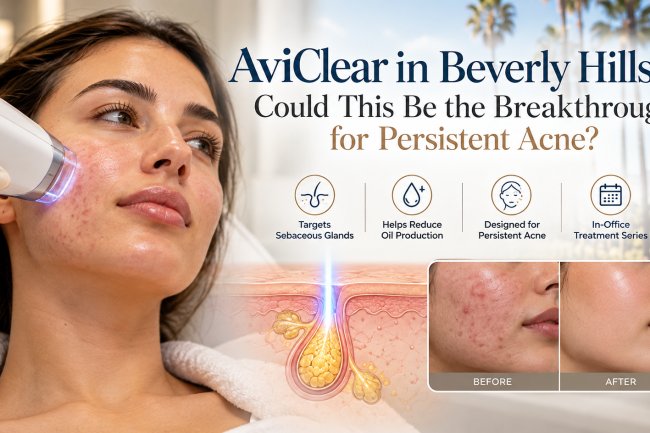
The clinic offers several acne treatment options, including medical dermatology and advanced technologies such as AviClear.
AviClear is designed to target sebaceous gland activity using a 1726 nm wavelength and is primarily intended for active acne rather than existing textural scars.
Patients can also read the clinic's AviClear Acne Laser Treatment blog for additional information.
Laser Resurfacing for Sun Damage and Pigmentation
Sun exposure can contribute to several visible skin changes, including:
- Uneven pigmentation
- Brown spots
- Uneven skin tone
- Fine lines
- Rough texture
- Loss of skin radiance
Different forms of pigmentation may require different treatment strategies.
The clinic's laser portfolio includes Fraxel Dual and PicoSure Pro, among other technologies, for selected pigmentary concerns.
Fraxel Dual's 1927 nm wavelength can be useful for certain superficial pigmentary and sun-damage concerns, while picosecond laser technology may be considered for selected pigment-related conditions.
However, pigmentation treatment requires particular care.
Melasma, for example, behaves differently from an isolated sun spot. Aggressive treatment can sometimes worsen pigmentation in susceptible individuals.
This is one reason diagnosis should come before laser selection.
Laser Treatment for Melasma
Melasma is a complex pigmentary disorder that commonly affects the face.
It can be influenced by:
- Sun exposure
- Hormonal factors
- Heat
- Genetics
- Skin type
- Other environmental factors
Because melasma can recur, treatment is often more complicated than simply removing visible pigment.
A dermatologist may recommend a combination of:
- Sun protection
- Topical therapy
- Lifestyle adjustments
- Selected laser or energy-based treatments
- Long-term maintenance
Patients should have realistic expectations because melasma management often focuses on control and improvement rather than a permanent one-time cure.
Pigmentation concerns can also be discussed as part of the clinic's Cosmetic Dermatology services.
Can Laser Resurfacing Improve Wrinkles?
Yes, certain resurfacing treatments can improve the appearance of fine lines and wrinkles.
Laser energy can stimulate remodeling within the skin, while ablative resurfacing can remove damaged surface tissue and promote the formation of new skin.
The degree of improvement depends on factors such as:
- Age
- Skin quality
- Severity of wrinkles
- Sun damage
- Treatment depth
- Laser settings
- Number of sessions
- Healing response
- Post-treatment skincare
For patients with mild skin laxity rather than primarily surface texture problems, other technologies may also be considered.
Laser Resurfacing vs Skin Tightening
These treatments are sometimes confused, but they address different aspects of aging.
Resurfacing
Laser resurfacing primarily focuses on the skin surface and dermal remodeling.
It may help with:
- Texture
- Fine lines
- Pigmentation
- Acne scars
- Sun damage
- Surface irregularities
Skin Tightening
Energy-based skin tightening is more focused on collagen remodeling and tissue laxity.
It may be considered when the primary concern is:
- Mild to moderate laxity
- Jawline definition
- Loose skin
- Fine lines
- Gradual collagen loss
Some patients may benefit from combining approaches when both surface quality and laxity are concerns.
The clinic's Laser & Energy-Based Treatments page provides more information about its energy-based treatment options.
What Happens During a Laser Resurfacing Consultation?
A consultation should go beyond simply looking at a patient's face and recommending a laser.
A dermatologist may evaluate:
- Skin type
- Skin tone
- Texture
- Pigmentation
- Scarring
- Wrinkles
- Sun damage
- Active acne
- Previous procedures
- Current medications
- History of abnormal pigmentation
- Previous laser complications
- Desired downtime
The physician can then determine whether resurfacing is appropriate and which technology may be best suited to the patient's goals.
Patients can also learn more about the physician's training and clinical background on the Dr. Ehsan Azimi page.
Why Skin Type Matters
Laser treatment settings should be individualized.
People with different skin types can have different risks of:
- Temporary pigmentation changes
- Prolonged redness
- Irritation
- Post-inflammatory hyperpigmentation
- Delayed healing
This does not mean people with darker skin cannot receive laser treatments.
Rather, it means treatment selection and settings need to be carefully considered.
A dermatologist experienced with laser procedures can evaluate the potential benefits and risks before treatment.
How Much Downtime Does Laser Resurfacing Require?
Downtime depends on the treatment.
A lighter fractional treatment may involve:
- Redness
- Mild swelling
- Dryness
- Peeling
- Temporary sensitivity
More intensive CO₂ resurfacing can involve a longer recovery period.
Patients may need to plan around:
- Work
- Social events
- Exercise
- Travel
- Makeup application
- Sun exposure
The clinic notes that recovery varies according to the type and intensity of treatment, with non-ablative approaches generally involving less downtime than more intensive ablative resurfacing.
What Should You Do After Laser Resurfacing?
Post-treatment care is extremely important.
Your dermatologist will provide specific instructions based on the procedure, but general principles may include:
Protect Your Skin From the Sun
Sun protection is essential during the recovery period and afterward.
A broad-spectrum sunscreen can help reduce unnecessary UV exposure while the skin heals.
Keep the Skin Hydrated
Your provider may recommend gentle moisturizing products to support the skin barrier.
Avoid Aggressive Skincare
Strong exfoliants, retinoids, acids, scrubs, and other active products may need to be paused temporarily.
Do Not Pick or Peel
Allow the skin to naturally shed and heal rather than manually removing peeling areas.
Follow Your Physician's Instructions
Your individual aftercare plan takes priority over generic internet advice.
Can You Combine Fraxel and CO₂?
Combination treatment can sometimes be considered, but it should not be assumed that using more lasers automatically produces better results.
Different technologies may be used at different stages or for different concerns.
For example, a patient may have:
- Active acne
- Acne scars
- Red acne marks
- Brown pigmentation
- Uneven texture
These problems do not necessarily respond to the same laser.
The clinic's Before & After Gallery includes examples of different laser and cosmetic treatment approaches.
Patients can also read the existing Fraxel vs CO2 Laser Resurfacing blog for a more focused comparison.
What About Broken Blood Vessels and Redness?
Fraxel and CO₂ are not primarily vascular lasers.
If visible blood vessels or persistent redness are the main concern, a vascular laser may be more appropriate.
Dermatology & Laser of Beverly Hills offers Excel V+, which uses 532 nm and 1064 nm wavelengths for selected vascular concerns.
This illustrates why a treatment plan should be based on the underlying problem rather than selecting a laser simply because it is well known.
Patients interested in redness can also explore the clinic's Acne, Rosacea & Peri-Oral Dermatitis services.
Can Laser Resurfacing Remove Acne Scars Completely?
No responsible treatment should promise complete removal of every acne scar.
The realistic goal is generally improvement, not perfection.
The amount of improvement depends on:
- Scar type
- Scar depth
- Skin characteristics
- Number of treatments
- Treatment technology
- Healing response
- Whether active acne is controlled
Some scars respond better to resurfacing than others.
A dermatologist can determine whether laser resurfacing is appropriate or whether another procedure may be needed as part of a combination strategy.
For additional information, see the clinic's Acne Scar Treatment blog.
How Many Laser Treatments Are Needed?
There is no universal number.
Some patients may notice meaningful improvement after one treatment, while others may require a series.
The number of sessions can depend on:
- Treatment goal
- Laser type
- Treatment intensity
- Scar severity
- Pigmentation
- Skin response
- Desired level of improvement
The dermatologist can establish a treatment plan after evaluating your skin.
Choosing a Laser Treatment in Beverly Hills
When researching laser skin resurfacing, it can be tempting to compare clinics solely based on the machines they advertise.
A more useful approach is to consider whether the practice can correctly diagnose the concern and select an appropriate treatment.
Important questions to ask include:
- Who will perform the procedure?
- Is the provider a qualified dermatologist?
- What condition is actually being treated?
- Which laser is being recommended?
- Why is that laser appropriate?
- What are the alternatives?
- How much downtime should you expect?
- What are the possible complications?
- How will the skin be managed after treatment?
- Is combination treatment necessary?
- What level of improvement is realistic?
The clinic emphasizes personalized treatment rather than generic treatment packages.
Why a Dermatologist-Led Approach Matters
Laser treatments are medical procedures, even when performed for cosmetic purposes.
A dermatologist can evaluate whether a visible concern is actually cosmetic or whether it could represent an underlying skin condition.
For example, a pigmented lesion should not automatically be treated cosmetically before it has been appropriately evaluated.
Likewise, persistent redness may not be simple rosacea.
A medical dermatology practice can combine diagnostic expertise with cosmetic and laser treatment when appropriate.
Learn more about General Dermatology and Cosmetic Dermatology.
Frequently Asked Questions
Is Fraxel better than CO₂?
Neither laser is universally better. Fraxel Dual and CO₂ have different treatment characteristics, and the appropriate option depends on the patient's skin concerns, goals, skin type, and desired recovery.
Is laser resurfacing painful?
The experience varies according to the treatment and individual sensitivity. Your provider can discuss anesthesia or comfort measures and what sensations to expect.
How long does laser resurfacing take?
Treatment time varies depending on the size of the area and the technology used. Your clinic can provide a more accurate estimate during consultation.
Can laser resurfacing treat acne scars?
Yes, certain laser resurfacing approaches can improve the appearance and texture of selected acne scars. Treatment should be based on scar type and whether active acne is controlled.
Can laser resurfacing treat pigmentation?
Certain lasers can improve selected pigmentation concerns, including some types of sun damage. However, conditions such as melasma require particularly careful diagnosis and treatment planning.
How long do laser resurfacing results last?
Results can be long-lasting because collagen remodeling and removal of damaged skin can create structural improvements. However, natural aging, sun exposure, and new skin damage continue over time.
Can I wear makeup after laser resurfacing?
The timing depends on the procedure and your healing. Your dermatologist should provide specific instructions about when makeup and active skincare can be resumed.
Final Thoughts
Laser skin resurfacing can be a powerful tool for improving skin texture, scars, pigmentation, sun damage, and signs of aging—but choosing the right treatment matters as much as choosing the technology.
Fraxel Dual and CO₂ laser resurfacing serve different purposes and have different recovery profiles. Some patients may benefit from a fractional non-ablative approach, while others may be candidates for more intensive resurfacing.
The right choice depends on the patient's diagnosis, skin type, treatment goals, previous procedures, and tolerance for downtime.
At Dermatology & Laser of Beverly Hills, Dr. Ehsan Azimi provides medical, cosmetic, and laser dermatology with an emphasis on individualized treatment planning.
If you are considering laser skin resurfacing in Beverly Hills, a consultation can help determine which technology—or combination of treatments—fits your specific skin concerns.
Visit the Contact Us page or call (310) 623-3200 to schedule a consultation.
Dermatology & Laser of Beverly Hills
9735 Wilshire Blvd, Suite 220
Beverly Hills, CA 90212
(310) 623-3200