Fraxel vs. CO2 Laser in Beverly Hills: Which One Should You Choose?
Compare Fraxel vs. CO2 laser in Beverly Hills, including benefits, downtime, skin concerns, and how personalized treatment planning can help you choose the right resurfacing option.
When you're looking for smoother, healthier-looking skin, laser resurfacing can offer a highly targeted approach to concerns such as wrinkles, acne scars, uneven pigmentation, sun damage, and changes in skin texture.
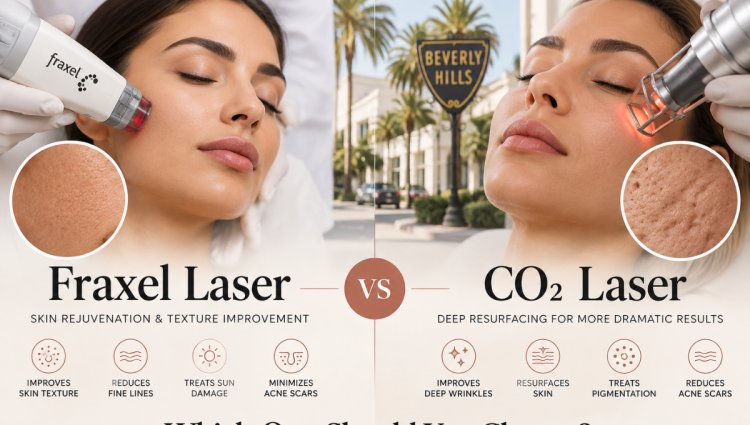
Two of the most frequently discussed resurfacing options are Fraxel Dual and CO₂ laser resurfacing. While both use advanced laser technology to improve the appearance of the skin, they work differently and offer different treatment experiences.
At Dermatology & Laser of Beverly Hills, treatment planning is personalized to each patient's skin, concerns, and goals. The practice offers both Fraxel Dual and CO₂ laser technology as part of its laser and energy-based treatments.
So, when comparing Fraxel vs. CO2 laser in Beverly Hills, which one should you choose?
The answer depends on your skin concerns, desired treatment intensity, skin type, and how much recovery time you can accommodate.
Quick Answer
Fraxel Dual is a fractional, non-ablative laser treatment that can address concerns such as pigmentation, sun damage, fine lines, acne scars, and uneven skin texture while generally requiring less downtime than ablative resurfacing.
CO₂ laser resurfacing is a fractional ablative treatment that removes controlled areas of damaged skin and stimulates collagen remodeling. It can be used for more intensive resurfacing, including concerns involving wrinkles, scars, and skin texture.
Neither treatment is universally "better." The right option depends on your individual skin and treatment goals. A consultation with a qualified dermatologist can help determine which approach is appropriate for you.
What Is Laser Skin Resurfacing?
Laser skin resurfacing uses controlled laser energy to create specific effects within the skin. Depending on the technology, treatment can stimulate collagen remodeling, address pigmentation, improve texture, or remove selected layers of damaged skin.
At Dermatology & Laser of Beverly Hills, the laser program includes advanced technologies such as Fraxel Dual and CO₂ laser resurfacing. The practice emphasizes customized treatment planning instead of generic treatment packages.
You can learn more about the clinic's complete range of Laser & Energy-Based Treatments and how different technologies are selected according to individual skin concerns.
Fraxel vs. CO₂ Laser: What Is the Difference?
The most important difference between Fraxel Dual and CO₂ laser is how each treatment interacts with the skin.
Fraxel Dual: Fractional Non-Ablative Resurfacing
Fraxel Dual uses two wavelengths—1550 nm and 1927 nm—to address different layers and concerns.
The 1550 nm wavelength reaches deeper into the skin and can support collagen remodeling, while the 1927 nm wavelength focuses more superficially and is useful for concerns involving pigmentation and sun damage.
Because Fraxel Dual is non-ablative, it creates microscopic treatment zones while leaving surrounding skin intact. This approach can help support healing and generally results in less downtime than ablative resurfacing.
CO₂ Laser: Fractional Ablative Resurfacing
CO₂ laser uses a 10,600 nm wavelength that is strongly absorbed by water in the skin.
Rather than simply heating the tissue, ablative CO₂ resurfacing removes controlled areas of the outer skin while also creating controlled thermal effects deeper in the tissue. This stimulates the body's healing response and encourages collagen remodeling.
Fractional CO₂ treatment treats microscopic columns of skin while leaving surrounding tissue intact, which can help balance treatment intensity with recovery.
Benefits, Risks, and Treatment Options
Both Fraxel Dual and CO₂ laser can play an important role in a personalized skin-resurfacing plan, but their benefits and recovery profiles are different.
| Treatment | Fraxel Dual | CO₂ Laser |
|---|---|---|
| Treatment type | Non-ablative fractional resurfacing | Ablative fractional resurfacing |
| Wavelengths | 1550 nm + 1927 nm | 10,600 nm |
| Common concerns | Pigmentation, sun damage, texture, fine lines, scars | Wrinkles, scars, texture and more intensive resurfacing |
| Skin effect | Creates microscopic zones without removing the outer skin | Removes controlled areas of damaged skin |
| Downtime | Generally less than ablative resurfacing | Generally more recovery than non-ablative resurfacing |
| Treatment intensity | Adjustable | Adjustable |
| Best approach | Depends on skin concern and goals | Depends on skin concern and goals |
The clinic's treatment philosophy is not based on choosing a laser simply because it is more intensive. Instead, the treatment is selected according to the patient's skin and desired outcome.
Potential Benefits
Depending on the treatment selected, laser resurfacing may help improve:
-
Uneven skin texture
-
Fine lines and wrinkles
-
Sun damage
-
Pigmentation
-
Acne scars
-
Overall skin tone and appearance
-
Signs of photoaging
Potential Risks and Considerations
Laser treatments can cause temporary redness, swelling, sensitivity, peeling, or other skin reactions. The intensity of these effects and the length of recovery vary according to the technology, settings, treatment area, and individual skin characteristics.
This is one reason why proper evaluation and treatment planning are important—particularly when treating pigmentation, acne scars, or patients who may be more susceptible to post-inflammatory pigmentation.
For additional context, the practice has also discussed acne scar treatment in Beverly Hills, including how different laser technologies may be used depending on the type of scar and associated pigmentation.
What to Expect From Laser Resurfacing
Every treatment plan is different, but the process generally follows several important stages.
Step 1: Skin Evaluation and Consultation
Your dermatologist evaluates your skin, discusses your concerns, reviews your medical and skincare history, and determines what you hope to achieve.
This step is particularly important when deciding between a non-ablative treatment such as Fraxel Dual and an ablative option such as CO₂ resurfacing.
Step 2: Customized Laser Treatment
Once the appropriate technology and treatment approach have been determined, the laser is used to deliver controlled energy to the targeted areas.
The settings can be adjusted according to the treatment area, skin characteristics, concern being treated, and desired treatment intensity.
Step 3: Recovery and Follow-Up
Recovery depends on the type and intensity of treatment.
Fraxel Dual generally involves less downtime than ablative resurfacing, while fractional CO₂ treatment typically requires a more significant recovery period.
Your dermatologist will provide individualized aftercare instructions and guidance regarding skincare, sun protection, and when you can return to your normal activities.
Fraxel vs. CO₂ Laser in Beverly Hills
If you're searching for laser skin resurfacing in Beverly Hills, having access to different technologies can be important because skin concerns are not identical from one patient to another.
For example, the clinic's Before & After Gallery shows examples of laser treatments used for acne scars, sun damage, pigmentation, wrinkles, skin texture, and other concerns. The gallery includes examples involving Fraxel Dual and CO₂ laser treatments.
Fraxel Dual may be considered when the primary concerns involve pigmentation, sun damage, texture, or selected scars and the patient prefers a non-ablative approach.
CO₂ laser may be considered when a more intensive resurfacing approach is appropriate for concerns such as wrinkles, scars, or significant changes in skin texture.
The choice should be based on an individualized dermatologic assessment rather than simply choosing the laser with the strongest reputation.
For a broader explanation of resurfacing options, you can also read Laser Skin Resurfacing in Beverly Hills, CA.
Why Choose Dermatology & Laser of Beverly Hills?
At Dermatology & Laser of Beverly Hills, laser treatment is positioned as part of medical dermatology rather than a one-size-fits-all cosmetic menu.
The practice states that treatment plans are customized according to each patient's unique skin needs and emphasizes evidence-based laser and aesthetic treatments.
Dr. Ehsan Azimi is a Harvard-trained physician-scientist specializing in medical and surgical dermatology, laser surgery, and aesthetics. His training includes the Harvard Combined Dermatology Program and dermatology research fellowship experience at Massachusetts General Hospital's Cutaneous Biology Research Center.
The clinic also offers a range of laser and energy-based technologies, including Fraxel Dual, CO₂ laser, Excel V+, PicoSure Pro, XERF, and other treatment options.
You can learn more about Dr. Ehsan Azimi and the clinic's approach to personalized dermatologic care before scheduling a consultation.
Frequently Asked Questions
Is Fraxel better than CO₂ laser?
Neither treatment is automatically better for every patient. Fraxel Dual and CO₂ laser use different technologies and treatment approaches. The appropriate choice depends on your skin concerns, treatment goals, skin characteristics, desired treatment intensity, and acceptable recovery time.
Which has more downtime: Fraxel or CO₂?
Fraxel Dual is a non-ablative treatment and generally involves less downtime than ablative resurfacing. Fractional CO₂ laser is ablative and typically requires a longer recovery period.
Your actual recovery can vary based on treatment settings, treatment area, and individual skin response.
Can Fraxel and CO₂ laser treat acne scars?
Both technologies may be used as part of an acne-scar treatment plan, depending on the type and severity of scarring.
Acne scars can include different types of textural changes, and some patients may benefit from combining different technologies. The clinic's acne-scar approach may include Fraxel, CO₂, RF microneedling, and other treatments depending on the patient's needs.
Is Fraxel good for pigmentation and sun damage?
Fraxel Dual includes a 1927 nm wavelength that targets superficial skin concerns such as pigmentation and sun damage. The appropriate treatment depends on the specific pigmentation disorder and the patient's skin characteristics.
How do I know which laser is right for my skin?
The best way to determine an appropriate treatment is through a consultation with a qualified dermatologist.
Rather than selecting a laser based only on the name of the technology, your provider can evaluate your skin, identify the underlying concern, discuss your goals, and explain the expected benefits, risks, and recovery associated with each option.
Conclusion: Choosing the Right Laser Starts With the Right Evaluation
When comparing Fraxel vs. CO₂ laser in Beverly Hills, the key difference is not simply which treatment is more powerful. Fraxel Dual and CO₂ laser are different technologies designed to create different effects within the skin.
Fraxel Dual offers fractional non-ablative resurfacing with 1550 nm and 1927 nm wavelengths and may be appropriate for concerns such as pigmentation, sun damage, texture, fine lines, and selected scars.
CO₂ laser provides fractional ablative resurfacing at 10,600 nm and can be used when a more intensive resurfacing approach is appropriate for wrinkles, scars, and skin texture.
Ultimately, your skin is unique, and your treatment should be too.
If you're considering Fraxel laser or CO₂ laser in Beverly Hills, schedule a consultation with Dermatology & Laser of Beverly Hills to discuss your skin concerns and explore a treatment plan tailored to your needs.
Contact Dermatology & Laser of Beverly Hills
Dermatology & Laser of Beverly Hills
9735 Wilshire Blvd, Suite 220
Beverly Hills, CA 90212
Phone: (310) 623-3200
Email: info@beverlyhillslaser.com
Hours: Monday–Friday, 9:00 AM–5:00 PM